Pipeline Velocity
Why Trade Shows Fail to Capture Intent Before Procurement Starts
2026-07-17
Trade show buyer intent often masks the true procurement timeline, with many organisations attending simply out of habit rather than genuine readiness to purchase. By the time decision-makers arrive at exhibition stands, the critical intention-setting phase has already passed, leaving suppliers competing for engagement that’s already too late.
Trade show buyer intent capture has become one of the most misunderstood parts of industrial marketing, and the numbers back this up: in research by event platform Certain, 94% of marketers said their company fails to convert event leads into opportunities. For UK manufacturers of tooling, machinery, and precision engineering equipment, this isn’t a minor inefficiency. It’s a structural problem with how procurement actually works.
Key Takeaways
- Procurement starts internally, months before a show. By the time a buyer walks the aisles, specs are often written and shortlists are already drawn up.
- Badge scans record attendance, not readiness to buy. A scan tells you someone stood at your stand, not that they need what you sell.
- 94% of marketers admit their company fails to convert event leads into opportunities. Presence and intent are two different things.
- Most trade show leads never get followed up. Industry research puts the figure as high as 80% — volume of contacts is being prioritised over qualification and timing.
- Intent-based demand capture works alongside shows, not instead of them. Our breakdown of intent data providers covers how manufacturers identify in-market accounts before the show floor opens.
How Procurement Actually Starts Long Before Show Season
Industrial procurement rarely begins at a stand. It begins with an internal trigger: a machine reaching end of life, a new production line, a compliance requirement, or a capacity constraint that engineering has flagged internally.
From there, the buying committee moves into spec research. Someone drafts a technical requirement, checks tolerances, reviews compatibility with existing tooling, and starts building a shortlist of suppliers who can plausibly meet it.
This stage can run for weeks or months before anyone books a stand pass. By the time the buyer arrives at a show, they usually already know which two or three vendors they’re seriously considering.
Trade show buyer intent capture, done properly, has to account for this timeline. If your first touchpoint with a buyer is the moment they scan their badge at your stand, you’re not at the start of their journey. You’re somewhere in the middle, possibly near the end.
Badge Scans Measure Presence, Not Trade Show Buyer Intent
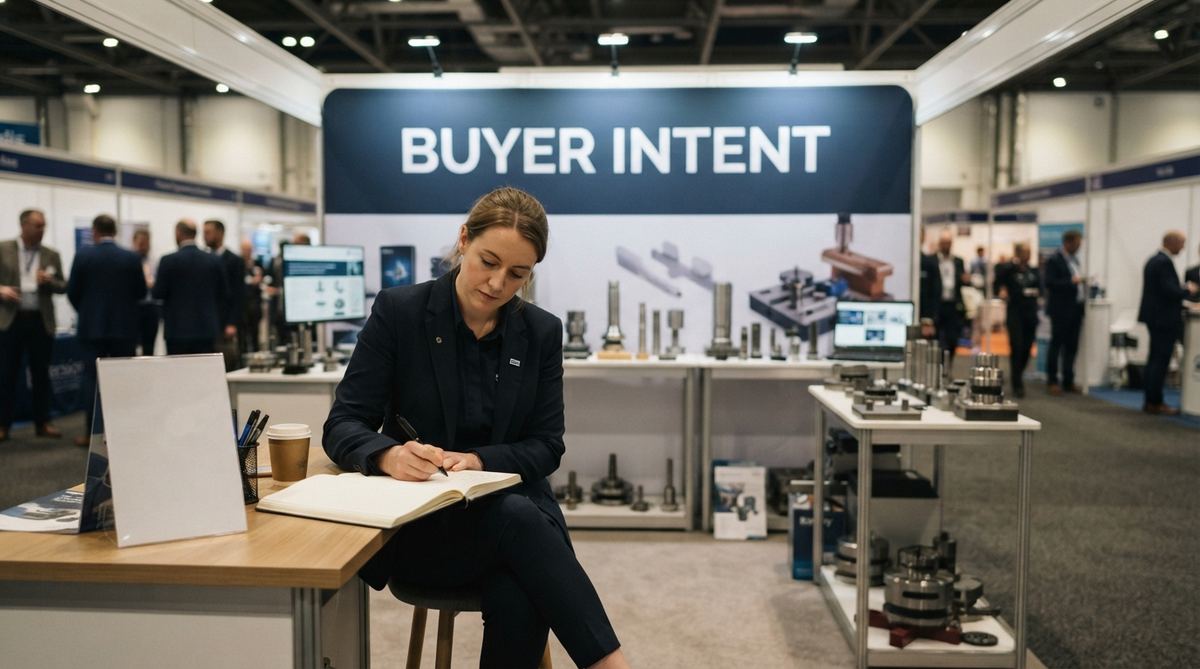
A badge scan tells you a person walked past, stopped, and let you record their details. It tells you almost nothing about where they are in the procurement cycle.
According to the Center for Exhibition Industry Research (CEIR), 81% of trade show attendees have buying authority — which sounds encouraging until you realise this is exactly why conversion still fails. Decision-makers are present in large numbers, but presence alone doesn’t reveal whether they’re evaluating your product line, comparing you against an incumbent supplier, or simply gathering background information for a project that’s eighteen months out.
In most industrial B2B contexts, the gap between a show conversation and a closed deal runs to months, not days. That gap only makes sense if you accept that the show itself rarely originates the buying decision. It sits inside a longer process that started before the exhibition and continues well after it.
Real trade show buyer intent capture requires distinguishing between a browsing engineer collecting datasheets and a procurement lead actively comparing quotes. Most stands can’t tell the difference in real time, which is exactly the gap this article is addressing.
The Cost Asymmetry: Exhibiting Versus Intent-Based Demand Capture
CEIR’s 2026 Marketing Spend Decision Report found that B2B exhibitions capture 41% of exhibitors’ total marketing budgets — the single largest channel. That’s a significant commitment of spend for a channel that, by the industry’s own admission, converts poorly.
The follow-up gap
Industry research widely attributed to CEIR puts the share of trade show leads that never receive any follow-up as high as 80%.
Compare that to the cost of monitoring in-market signals continuously throughout the year. Intent data platforms, content engagement tracking, and account-level research signals cost a fraction of a stand, travel, staffing, and show materials combined, yet they operate every week rather than for the three or four days a show runs.
This is the cost asymmetry in plain terms: manufacturers spend heavily on a channel with a short window and poor tracking, while cheaper, always-on intent signals go under-resourced. Reviewing where your budget currently sits is something we cover directly in our marketing services, particularly for manufacturers weighing show spend against digital demand capture.
Why UK Industrial Manufacturers Feel This Gap Most Acutely
Tooling, machinery, and precision engineering purchases are technical, high-value, and infrequent. A single tooling upgrade or machinery investment might happen once every few years for a given buyer.
That infrequency raises the stakes of every procurement cycle and pushes buyers to do more upfront research, not less. Technical specification documents, tolerance requirements, and compliance standards (ISO certifications, CE and UKCA marking, industry-specific approvals) are usually locked down before a single vendor conversation happens.
UK manufacturers in the West Midlands and other industrial clusters often exhibit at the same regional and national shows every year, treating them as a fixed calendar event rather than reassessing whether the format still matches how their buyers actually research. Our work through fractional CMO support for West Midlands manufacturers frequently starts with exactly this question: is show spend matched to where buyers actually are in their journey?
What Trade Show Buyer Intent Capture Should Actually Look Like
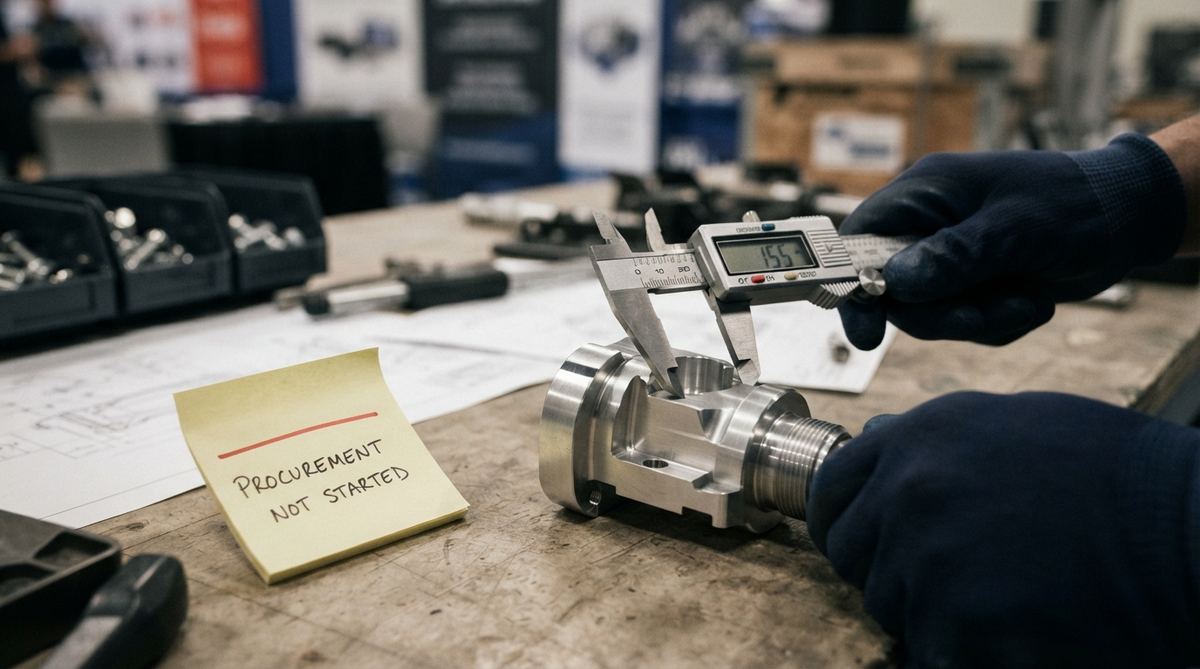
Capturing genuine intent means qualifying interest at the point of contact, not just after the show when the trail has gone cold.
A workable qualification framework at the booth typically covers:
- What triggered their visit to this specific stand (spec match, referral, existing supplier issue)?
- Where they are in their internal buying process (early research, active shortlist, final approval stage)?
- Who else is involved in the decision, and what their timeline looks like?
- What specific technical requirement they’re trying to solve?
Few exhibitors run a defined qualification process like this at the stand, and many still rely on manual capture — paper forms, handwritten notes, business cards in a bowl. Manual capture makes it almost impossible to score intent in real time or route hot leads to sales before the show even closes.
Always-On Intent Monitoring: The Alternative to Waiting for Show Season
If procurement starts with internal triggers and spec research, then the highest-value moment to reach a buyer is before they’ve shortlisted anyone, not after.
Always-on intent monitoring tracks signals like technical content downloads, repeated visits to spec pages, competitor comparison searches, and account-level research activity throughout the year. This gives manufacturers visibility into which accounts are actively researching long before any show floor opens.
We’ve put together a detailed comparison of platforms in this space in our guide to intent data providers, covering which tools suit industrial B2B sellers specifically rather than generic SaaS use cases.
The goal isn’t to replace human judgement with software. It’s to know which accounts to prioritise before your sales team spends a day walking a show floor hoping to bump into the right people.
Pre-Show Outreach: Turning In-Market Accounts Into Meetings Before the Doors Open
Once you know which accounts are actively researching, pre-show outreach becomes far more precise than a generic “come visit our stand” email blast.
Booking a short meeting with an in-market account before the show, even a 15-minute call, means the stand conversation on the day starts from an existing relationship rather than a cold introduction. It also means your sales team isn’t relying on chance encounters to find the buyers who matter.
This approach flips the usual failure point. Instead of hoping the right people find your stand, you’ve already identified them and secured time on their calendar before the show even begins.
Treating Shows as Acceleration, Not Discovery
The most useful mental shift for exhibitors is to stop treating shows as a discovery channel and start treating them as an acceleration point in a procurement cycle that’s already underway.
Under this model, a show stand exists to move known, qualified accounts forward, confirm technical fit, resolve final objections, and get commercial terms discussed face to face. It’s not there to generate cold awareness from a standing start.
This reframing changes how you measure success. Instead of counting badge scans, you count how many pre-identified in-market accounts you actually met, and how many of those conversations moved a deal closer to a decision.
If you want a clear view of how your current show strategy compares against this model, requesting a pipeline diagnosis maps out where intent is being missed across your existing funnel, both online and at events.
Conclusion
Trade show buyer intent capture fails most often because it starts too late — at the stand — rather than earlier, when the buyer’s internal trigger and spec research first began. UK industrial manufacturers in tooling, machinery, and precision engineering are especially exposed to this timing gap because their purchases are infrequent, technical, and shortlisted well before any exhibition hall opens its doors.
Fixing this doesn’t mean abandoning shows. It means pairing them with always-on intent monitoring, structured pre-show outreach, and a booth qualification process that actually distinguishes browsers from buyers.
If you’d like to see where intent is currently leaking out of your funnel, request a pipeline diagnosis or get in touch to talk through your current show and demand generation strategy.
Frequently Asked Questions
What is trade show buyer intent capture?
Trade show buyer intent capture refers to identifying and qualifying genuine purchase intent from attendees, rather than simply recording who visited a stand. It involves understanding where a buyer sits in their procurement journey, not just that they stopped to talk.
Why do most trade show leads fail to convert?
Most trade show leads fail to convert because exhibitors capture attendance data (badge scans) without qualifying actual buying intent or timeline. Industry research puts the share of leads that never receive follow-up as high as 80%, and few exhibitors run a defined qualification process at the booth.
Is exhibiting at trade shows still worth it in 2026?
Exhibiting is still worth it in 2026, but only when treated as an acceleration point for accounts already identified through pre-show research, not as a primary discovery channel. Combining show attendance with always-on intent monitoring gets far better results than relying on the stand alone.
How can manufacturers identify buyer intent before a trade show?
Manufacturers can monitor account-level research signals such as technical content downloads, spec page visits, and competitor comparisons throughout the year. This always-on intent monitoring reveals which accounts are actively researching well before show season, allowing for targeted pre-show outreach.
What’s the difference between a badge scan and real buyer intent?
A badge scan only confirms someone stood at your stand, while real buyer intent reflects where they actually sit in their procurement decision — whether they’re early in their research or ready to shortlist. CEIR research shows 81% of attendees have buying authority, but that alone doesn’t tell you if they’re ready to buy from you specifically.
What should exhibitors do differently to improve lead qualification?
Exhibitors should build a defined qualification process at the booth that asks about buying triggers, decision timeline, and technical requirements rather than just scanning badges. Scoring leads while they’re still at the stand lets sales prioritise in-market accounts before the show closes, instead of working through an undifferentiated list weeks later.